Instructions to use lora-library/https-huggingface-co-lora-library-test with libraries, inference providers, notebooks, and local apps. Follow these links to get started.
- Libraries
- Diffusers
How to use lora-library/https-huggingface-co-lora-library-test with Diffusers:
pip install -U diffusers transformers accelerate
import torch from diffusers import DiffusionPipeline # switch to "mps" for apple devices pipe = DiffusionPipeline.from_pretrained("stabilityai/stable-diffusion-2-1-base", dtype=torch.bfloat16, device_map="cuda") pipe.load_lora_weights("lora-library/https-huggingface-co-lora-library-test") prompt = "Ping hair" image = pipe(prompt).images[0] - Notebooks
- Google Colab
- Kaggle
- Local Apps Settings
- Draw Things
- DiffusionBee
| license: creativeml-openrail-m | |
| base_model: stabilityai/stable-diffusion-2-1-base | |
| instance_prompt: Ping hair | |
| tags: | |
| - stable-diffusion | |
| - stable-diffusion-diffusers | |
| - text-to-image | |
| - diffusers | |
| - lora | |
| inference: true | |
| # LoRA DreamBooth - bo | |
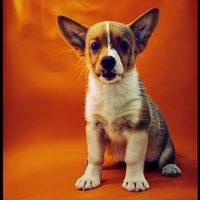
| These are LoRA adaption weights for [stabilityai/stable-diffusion-2-1-base](https://huggingface.co/stabilityai/stable-diffusion-2-1-base). The weights were trained on the instance prompt "Ping hair " using [DreamBooth](https://dreambooth.github.io/). You can find some example images in the following. | |
| Test prompt: Ping | |
|  | |
|  | |
|  | |
|  | |